
SunHeat Solar
Solar + EV Charging: Planning Home and Business Charging
Home/Resources/Solar + EV Charging: Planning Home and Business Charging

Solar + EV Charging: Planning Home and Business Charging

A comprehensive guide to powering electric vehicles with clean on-site solar power at home or at the workplace.

Key Planning Takeaways

Can an electric vehicle be charged directly with solar power?

Yes. An electric vehicle can be charged using electricity generated by your rooftop or commercial solar panels, providing clean, localized vehicle fuel.

Even when charging at night when panels are inactive, utility net metering credits earned from daytime solar exports help offset the electricity drawn to recharge your EV.

How much additional solar capacity does an electric vehicle typically require?

A typical passenger EV driven 10,000 to 12,000 miles per year generally requires approximately 3,000 to 4,000 kilowatt-hours of additional electricity annually, equivalent to about 2 to 3 kilowatts of additional solar panel capacity.

Exact needs depend on vehicle efficiency (miles per kWh), daily commute distance, and charging frequency.

What electrical upgrades are needed to install a Level 2 EV charger at home?

A Level 2 home charger requires a dedicated 240-volt electrical circuit, typically with a 40-amp to 60-amp double-pole breaker.

During project planning, an electrician evaluates your main service panel to ensure available amperage headroom without overloading the home electrical service.

The Mechanics of Charging an EV from Solar Power

Electric vehicle adoption and residential solar are natural partners. Powering an EV with grid power is already generally more economical than gasoline, but generating that electricity on your own roof locks in predictable, clean fuel costs for years to come.

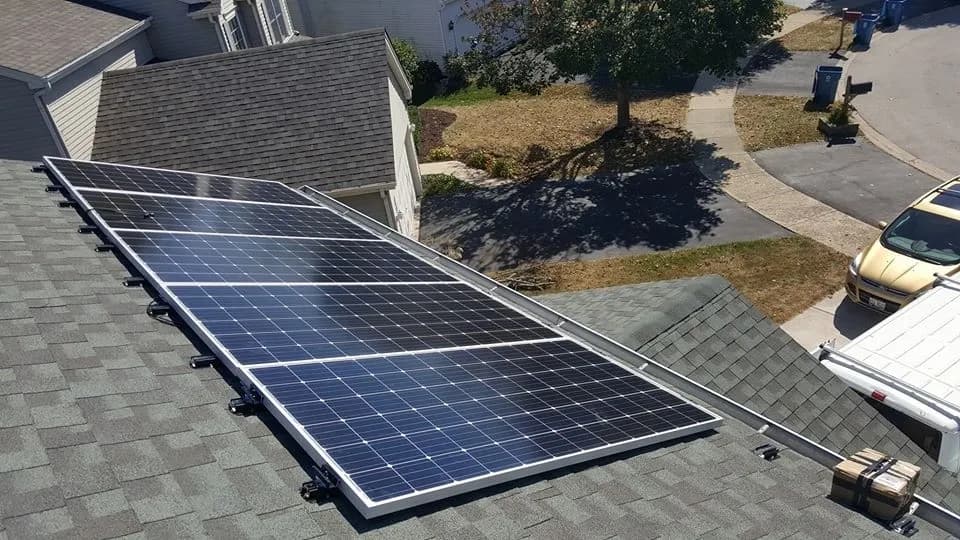
During midday hours when solar panels reach peak output, a home may generate more electricity than household appliances consume. If an EV is plugged in at home during the day, that surplus solar energy flows directly into the vehicle battery.

For homeowners who commute during the day and charge overnight, net metering provides the economic bridge. Surplus solar energy exported to the grid during daylight hours earns utility billing credits, which offset the grid electricity drawn to recharge the EV overnight.

Commercial EV Charging & Workplace Infrastructure

Commercial properties, office parks, and retail centers increasingly evaluate EV charging as an amenity for employees, clients, and commercial fleet vehicles.

Adding multiple EV charging stations creates substantial electrical demand. Pairing commercial charging with commercial rooftop solar or solar parking canopies helps offset this increased facility load.

Commercial properties can evaluate networked charging stations that offer billing management, access controls, and energy reporting, or straightforward non-networked stations for dedicated staff or fleet use.

The Role of Battery Storage in EV Charging Systems

Adding a stationary home battery storage system creates a complete localized energy ecosystem. A battery can store daytime solar power and discharge it into an EV during evening hours.

Furthermore, in commercial settings, stationary battery storage can assist with peak demand management by smoothing out sudden power spikes when multiple vehicles initiate charging sessions simultaneously.

While residential vehicle batteries cannot yet routinely back up homes in standard configurations, pairing solar panels, stationary storage, and smart EV chargers represents the leading edge of household electrification.

Frequently Asked Questions

Direct, transparent answers regarding solar planning and system engineering.

Evaluate Solar for Your Property

Connect with SunHeat Solar Inc. for an honest property assessment, roof review, and personalized quote in Batavia and surrounding northern Illinois communities.

SunHeat Solar Inc. • 336 McKee St E, Batavia, IL 60510 • info@sunheatsolar.com